

The forest was silent when we began.
Not the kind of silence you find in cities or empty rooms, but the deep, living silence of ancient rainforest. Mist hung low between the trees, leaves dripped from the night’s rain, and somewhere far in the distance, birds called through the thick jungle canopy.
It was still early morning in Bwindi Impenetrable National Park, and I was about to experience something I had dreamed about for years—gorilla trekking in Uganda.
At that moment, I had no idea the experience would leave me emotional, speechless, and completely changed.
Entering the Forest
The trek began shortly after sunrise. Our small group gathered at the park headquarters, where guides explained the rules carefully.
Keep your distance.
Stay calm.
No sudden movements.
And most importantly—respect the gorillas.
These are not zoo animals. They are wild mountain gorillas living freely in one of the oldest forests in Africa.
With walking sticks in hand and backpacks secured, we stepped into the dense forest.
Almost immediately, the outside world disappeared.
The trails were muddy and steep, weaving through tangled vines, giant ferns, and towering trees. Sometimes we climbed. Sometimes we ducked beneath branches. Other times we simply stopped to catch our breath and listen to the sounds around us.
Every step deeper into Bwindi felt like stepping back in time.
The Search Begins
Tracking gorillas is unpredictable. That’s part of what makes it so special.
The guides communicated quietly with trackers ahead of us, searching for signs of movement—broken branches, footprints, fresh nests. The forest itself seemed alive, holding clues we couldn’t yet understand.
Hours passed.
The hike became tougher, but strangely, nobody complained. There was excitement in the uncertainty. Every sound made us pause. Every movement in the trees made our hearts race.
Then suddenly, our guide stopped.
He turned toward us slowly and smiled.
“They’re close.”
The Moment Everything Changed
We moved carefully now, almost silently.
The forest felt different—heavier somehow, charged with anticipation. My heartbeat quickened as we pushed through thick vegetation.
And then I saw him.
A massive silverback gorilla sitting calmly just a few meters away.
Time stopped.
He looked powerful yet peaceful, massive yet strangely gentle. Sunlight filtered softly through the trees, illuminating the silver hair across his back.
Then, unexpectedly, he looked directly at me.
Not past me.
At me.
For a few seconds, it felt like the entire forest disappeared. There was no noise, no movement—just that quiet connection between human and gorilla.
It’s difficult to explain unless you’ve experienced it yourself.
There was intelligence in his eyes. Awareness. Curiosity.
And in that moment, you realize how deeply connected we are to these incredible creatures.
Life Inside the Gorilla Family
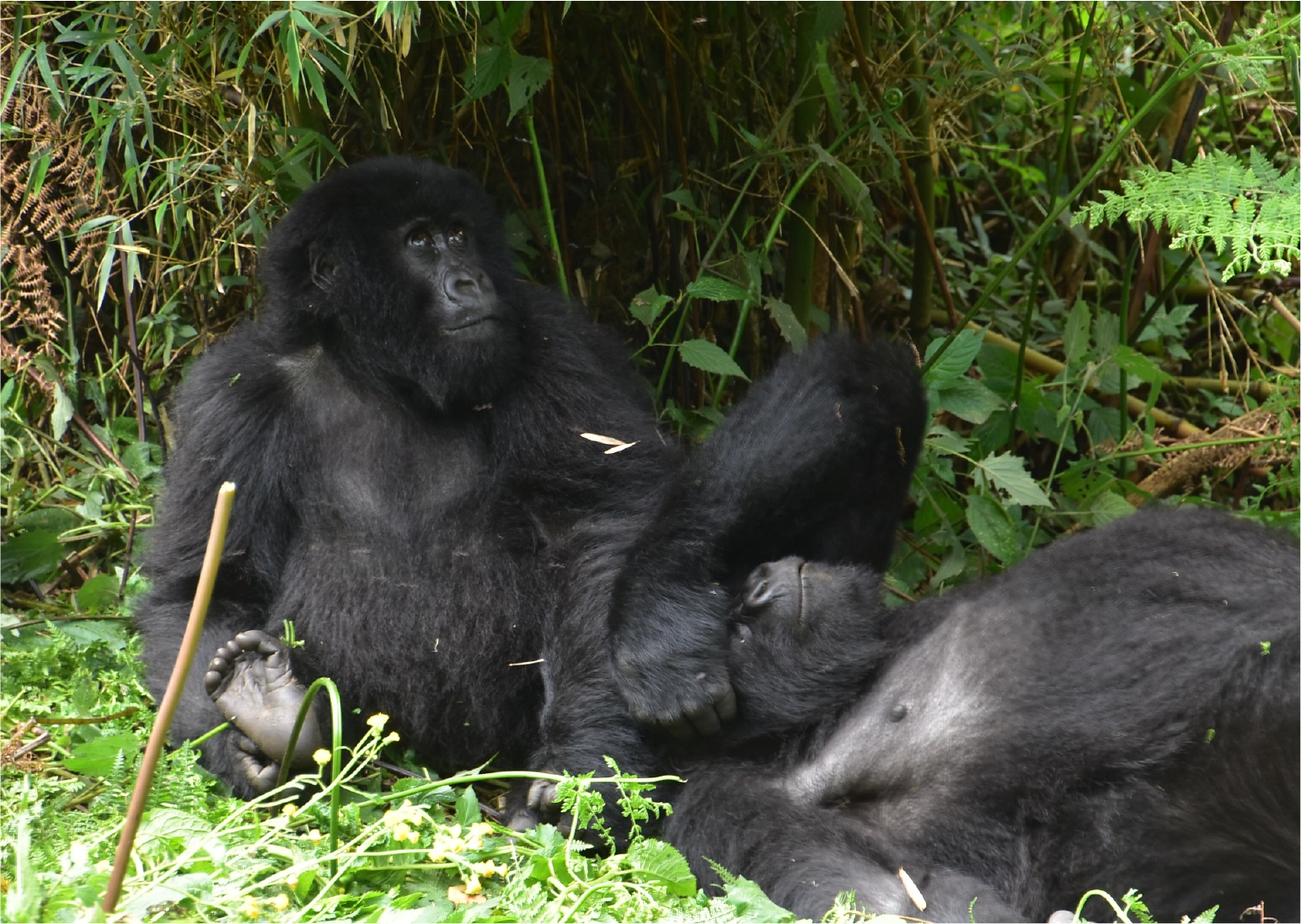
As we watched, the rest of the gorilla family slowly revealed themselves.
Young gorillas played in the vines, tumbling and chasing one another like children. Mothers groomed their babies gently while feeding on leaves nearby.
The silverback remained watchful but calm, occasionally glancing toward us before continuing to feed.
Nothing about the experience felt rushed or staged. It felt raw and real.
This is what makes gorilla trekking in Uganda one of the most powerful wildlife experiences in the world.
You are not observing animals behind barriers.
You are stepping briefly into their world.
More Than a Safari
Before visiting Uganda, I thought gorilla trekking would simply be another adventure activity—a bucket-list experience to check off.
But it became something much deeper.
There’s something profoundly humbling about standing face-to-face with a mountain gorilla in the wild. It changes the way you see nature, conservation, and even yourself.
You begin to understand why protecting places like Bwindi Impenetrable National Park matters so much.
These forests are not just tourist destinations. They are homes to one of the rarest species on Earth.
And every trekking permit helps support conservation efforts and local communities.
The Hike Back
After one unforgettable hour with the gorillas, it was time to leave.
Nobody wanted to go.
As we slowly hiked back through the forest, the mood felt different. The exhaustion from earlier had disappeared, replaced by quiet reflection.
People smiled more.
Talked less.
Everyone seemed lost in their own thoughts, replaying the experience in their minds.
The forest no longer felt intimidating—it felt magical.
Why Uganda Offers the Best Gorilla Trekking Experience
There are only a few places in the world where you can see mountain gorillas in the wild, and Uganda remains one of the best.
Bwindi Impenetrable National Park offers:
- Incredible biodiversity
- Experienced local guides
- Multiple gorilla families to track
- Authentic rainforest trekking experiences
Unlike crowded safari destinations, Bwindi still feels untouched and deeply authentic.
For travelers seeking meaningful wildlife encounters, this is more than a safari.
It’s a life-changing journey.
Planning Your Gorilla Trek
If you’re considering gorilla trekking in Uganda, here are a few tips:
- Book permits early—they sell out quickly
- Wear waterproof hiking boots and long sleeves
- Carry water and light snacks
- Prepare for muddy and physically demanding trails
- Most importantly, take your time and enjoy the experience
The best time to visit is during the dry seasons when hiking conditions are easier, though gorilla trekking happens year-round.
A Memory That Never Leaves You
Long after leaving Uganda, I still think about that morning in Bwindi.
The mist in the trees.
The silence of the forest.
And the moment I locked eyes with a mountain gorilla.
Some travel experiences fade with time.
This one doesn’t.
Because once you stand face-to-face with a creature so powerful, so rare, and so deeply connected to us, you leave with more than photographs.
You leave with perspective.
And perhaps, a deeper respect for the wild places that still exist in our world.